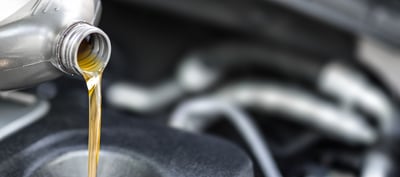

Whether you fuel up with diesel or gasoline, motor oil has one job: protect the engine. Simple enough, right?
Not exactly. Diesel and gasoline engine oils have been formulated by lubricant manufacturers to operate under very different conditions. While both reduce friction, manage heat, and help control wear, they are designed to handle unique combustion processes and different contaminants.
Here are a few of the biggest differences:
1. Diesel Oils Handle More Soot
Diesel engines generate significantly more soot during combustion than gasoline engines. Left unmanaged, accumulated soot thickens oil, which increases wear and leaves problematic gummy deposits throughout the engine.
As a result, oil for diesel engine applications has to contain much stronger detergent and dispersant additive packages. These additives help to suspend soot particles so they can’t clump together into that harmful sludge.
Since gasoline engines don't produce soot at the same rate, their oil formulations focus on other priorities, like fighting hard carbon deposits or varnish.
2. Additive Packages For Heavy Loads vs. High Speeds
Diesel engines operate with higher compression ratios and heavier loads than gas engines. To withstand those conditions, diesel oils contain more robust anti-wear additives and oxidation inhibitors. They’re designed to protect components that experience intense pressure over long operating periods.
Gasoline engine oils instead emphasize protection against other issues with their additives: high-speed operation, fuel dilution, and gradual deposit formation around valves and pistons.
3. Cold Starts Are Harder For Diesel Engines
Starting any engine places stress on moving components, but cold temperatures make oil thicker, which slows circulation during startup.
However, diesel engines often require additional viscosity considerations because their higher compression ratios and heavier internal components place greater demands on lubrication during cold starts. Manufacturers formulate modern diesel oils to improve flow characteristics and still protect parts once operating temperatures rise.
4. Oils Must Support Different Emissions Systems
Modern engines have sophisticated emissions systems such as diesel particulate filters (DPFs) and selective catalytic reduction (SCR) systems in diesel engines. Manufacturers formulate diesel oils with reduced ash content to help protect these components.
Gasoline engines have their own emissions requirements, including catalytic converters that can also be affected by lubricant chemistry.
These requirements influence the additives manufacturers choose and help explain why specifications continue to evolve over time.
For All These Reasons (and More), Don’t Use the Wrong Oil!
Folks sometimes ask their lubricant provider, “can I use diesel oil in a gas engine?”
The answer depends on the specific oil and the manufacturer's requirements, but often it’s no.
It’s true that some diesel oils carry certifications that allow use in certain gasoline engines. Others do not. That's why questions such as can I use diesel oil in gas engine applications or can you run diesel oil in a gas engine situations don't have a universal yes-or-no answer.
The safest approach is always to follow OEM recommendations and verify that the oil meets the required specifications. Modern engines are designed around specific lubricant performance standards. If you use the wrong product, it can affect everything from emissions systems to fuel economy, warranty compliance, and long-term engine durability.
If you need guidance to the best engine oil for your vehicles or equipment, speak with our Certified Lubricant Specialist at Whatley Oil. A quality lubricant matched to the engine's operating conditions supports the longest possible service life.
FAQs
No. While both lubricate and protect engine components, gasoline and diesel engine oil are formulated for different operating conditions. Diesel oils typically contain stronger detergent and dispersant additives to manage soot and heavy loads.
Sometimes, but only if the oil carries the appropriate gasoline-engine certifications and meets your manufacturer's specifications. Always check your owner's manual before making a substitution.
In some cases, yes. However, using a diesel oil that lacks the required gasoline-engine approvals could affect performance, emissions systems, or warranty coverage. Verification is important before switching products.
Diesel combustion produces more soot and contaminants than gasoline combustion. Higher detergent and dispersant levels help keep those particles suspended in the oil so they can be removed during oil changes.
Not necessarily. Oil life depends on operating conditions, engine design, duty cycle, and manufacturer recommendations. Heavy loads, idle time, dust, and extreme temperatures can all affect service intervals.
Viscosity determines how easily oil flows at different temperatures. The correct viscosity helps protect engines during cold starts while maintaining a protective film under high operating temperatures and loads.
Modern gasoline and diesel engines use advanced emissions equipment that can be affected by lubricant chemistry. Using an oil designed for the engine's emissions system helps maintain performance and avoid unnecessary wear.
Using the wrong oil can reduce wear protection, increase deposits, affect emissions equipment, and shorten engine life. Following OEM specifications helps ensure the oil is compatible with the engine's design and operating conditions.