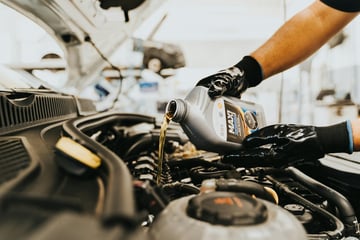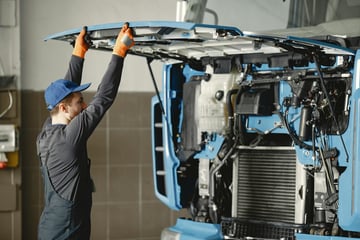
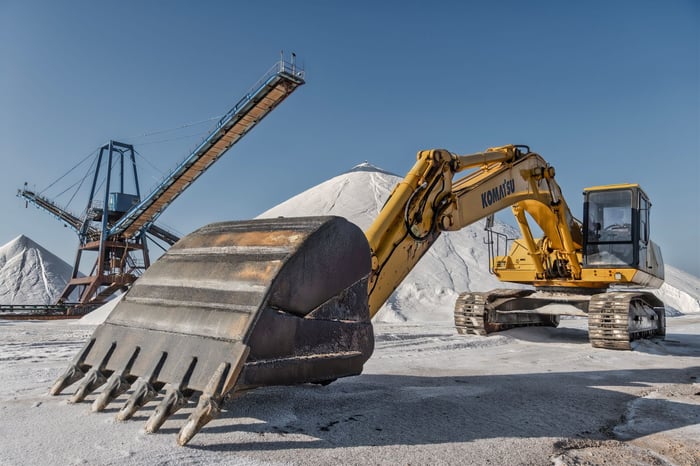
Heat and pressure put tremendous stress on industrial equipment — even moreso with long operating hours or with frequent shock loads. These conditions call for heavy duty lubricants that are formulated to reduce wear on components and extend equipment life. However, you’ve got to match the type of lubricant to the equipment and operating environment.
What Qualifies as a “Heavy Duty Lubricant?”
A heavy duty lubricant is chemically designed for intense operating conditions that exceed those encountered by standard automotive or light-duty products.
If you’re sourcing lubricants for construction or ag equipment or heavy industrial machinery and manufacturing systems, you’re in the right category. These applications all require enhanced additive packages to withstand extreme temperatures, continuous operation, high loads, contamination exposure, or significant mechanical stress. With that said, there are different types for each stress factor.
High Heat Lubricants
Heat shortens lubricant life. As temperatures rise, conventional oils can oxidize, thin out, form deposits, and lose their protective properties. A specialized high heat lubricant is formulated to maintain stability at elevated temperatures and resist breakdown.
High heat lubrication products are required in situations such as:
- Engines operating under heavy loads
- Compressors
- Industrial gearboxes
- Private aircraft
- Manufacturing equipment
- High-temperature bearings
A lubricant designed for elevated temperatures maintains film strength and reduces oxidation-related wear associated with the intense heat of these applications.
High Pressure Lubricants
Pressure creates other challenges. Heavy loads force lubricant films apart, which accelerates wear if it allows metal-to-metal contact.
A quality high pressure lubricant contains additives to create a more durable protective layer that prevents scuffing, pitting, and surface damage in extreme loading conditions like:
- Gear drives
- Heavily loaded bearings
- Construction equipment pivots
- Industrial presses
- Mining equipment
Many of the lubricants you’d pick out for these types of machinery rely on extreme-pressure (EP) additive technology to keep protection high when standard oils would reach their limits.
Grease vs. Oil
Heavy-duty equipment uses grease when components need lubricant to stay in place and oil when circulation is required.
- Grease: Bearings, joints, pins, and slow-moving components use grease because it resists leakage and provides long-lasting protection.
- Oil: Engines, hydraulic systems, compressors, and gearboxes use oil because it can flow, transfer heat, remove contaminants, and continuously replenish protective films.
Mineral-Based Lubricants
A mineral based lubricant is made from refined petroleum base stocks. These products are widely used for dependable, cost-effective performance in hydraulic systems and general industrial or fleet equipment. However, mineral oil based lubricants have limitations when under severe temperature extremes or extended drain intervals.
Synthetic, Water-Based & Specialty Lubricants
These lubricant formulations are alternatives for specific situations where standard products may struggle.
- Synthetic Lubricants: Often provide improved oxidation resistance, better cold-weather performance, or greater stability across wide temperature ranges.
- Water-based Lubricants: May be selected in applications where fire resistance is important.
Other specialty lubricants may address unique requirements such as food-grade compliance or environmentally sensitive locations.
Where to Buy Heavy Duty Lubricants
The right lubricant for your equipment will depend less on brand preference and more on manufacturer specs and additive packages. Equipment design, operating conditions, and maintenance goals all come into play, too.
Need guidance? Talk to our Certified Lubrication Specialist at Whatley Oil. We’ll direct you to the right lubricant types for your application, whether it involves high heat, pressure, contamination, or heavy loads. Learn more about our heavy duty lubricant services.
FAQs
A heavy duty lubricant is formulated for demanding operating conditions such as high loads, elevated temperatures, contamination exposure, and continuous operation. These products are commonly used in industrial, construction, agricultural, and fleet equipment.
A high heat lubricant is beneficial when equipment regularly operates at elevated temperatures. Engines, compressors, gearboxes, and industrial bearings often require lubricants that resist oxidation and maintain protection under heat.
High heat lubrication refers to using lubricants specifically formulated to perform in high-temperature environments. These products help maintain viscosity, resist breakdown, and reduce deposit formation.
A high pressure lubricant is designed to protect components subjected to extreme loads and contact pressures. These products often contain extreme-pressure additives that help prevent wear and metal-to-metal contact.
Standard lubrication protects components under normal operating conditions. High pressure lubrication provides additional protection for heavily loaded gears, bearings, and industrial equipment where loads can overwhelm conventional lubricant films.
No. Grease and oil serve different purposes. Grease stays in place and is often used in bearings, joints, and pins, while oil circulates through systems to lubricate, cool, and remove contaminants.
Mineral oil based lubricants are refined from petroleum base stocks. They provide reliable performance across many industrial and fleet applications and remain one of the most commonly used lubricant types.
Not necessarily. Synthetic lubricants often provide advantages in extreme temperatures and severe operating conditions, but many mineral-based lubricants perform exceptionally well in everyday industrial and construction applications. The best choice depends on the equipment and environment.