If you’re trying to select a construction fuel tank rental, you’ll want to nail down your expected fuel consumption, project duration, delivery frequency, available space, site conditions, and applicable storage requirements. With these details in hand, your service provider can guide you to the right model. Contractors should also compare tank construction, security features, monitoring options, and the support included with the rental as they evaluate providers.
Whatley Oil provides construction fuel tank rentals and diesel delivery for projects in Georgia and Alabama. Use these 10 factors to narrow down the tank and service arrangement for your jobsite.
1. Assess Your Project's Fuel Capacity Requirements
The first step is to think about the total fuel consumption needs of your construction equipment and how long you’ll need them on site.
- Construction fuel tank sizes: Whatley Oil works with construction fuel tanks ranging from approximately 500 gallons to 10,000 gallons, depending on project requirements.
A good starting point is to estimate daily fuel consumption for the equipment using the tank, then decide how many operating days you want between deliveries. Tank capacity and delivery frequency should be considered together. A larger tank can reduce delivery frequency, while a smaller tank may make more sense when site space is limited or the project has lower fuel demand.
Pay attention to the number of machines you’re operating and their fuel efficiency times the length of your project to figure the right size. You’ll also want to think about how often you want to refill and take delivery of diesel fuel. Depending on your job, you may want to refuel as few times as possible to save transport costs on construction fuel.
2. Understand Single-Walled vs. Double-Walled Tank Options
Double-walled tanks will provide better protection against leaks. They’ve got an additional layer to prevent environmental contamination. Single-walled tanks will be less expensive and work fine for low-risk areas or places where you have monitoring.
Tank Type |
Construction |
Considerations |
|
Single-Wall Tank |
One primary tank wall |
Lower-cost option that may be appropriate where site conditions and applicable requirements allow |
|
Double-Wall Tank |
Primary tank surrounded by a second containment wall |
Adds another layer of protection against leaks and environmental contamination |
Tank requirements can vary by location and application, so confirm applicable rules with your supplier before selecting a rental tank.
3. Prioritize Safety Features
Regardless of the type of diesel fuel tank rental you choose, make sure it has critical safety components like:
- Lockable access points
- Fire-resistant materials
- Spillage containment systems
The best fuel storage tank rental units are built to hold up even in rough environments which are common to construction sites.
4. Consider Mobility and Placement
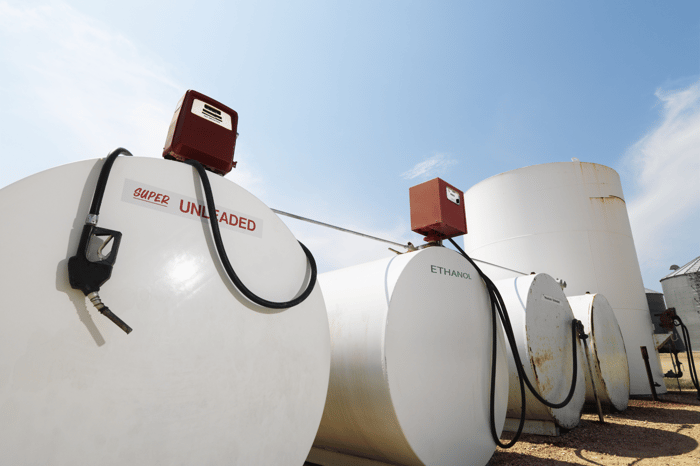
Select off-road diesel tank rentals that are easy to transport and place at your job site. These features make it simpler:
- Trailer-mounted options for easy relocation
- Skid-mounted tanks for stable positioning
- Compatibility with site terrain and access points
Trailer-mounted tanks are useful when the fueling setup needs to move as work progresses. Skid-mounted tanks provide a stationary option for projects where equipment repeatedly returns to the same fueling point.
Before selecting either configuration, consider where the delivery truck can access the tank, how construction traffic moves through the site, and whether the tank will need to relocate during the project.
5. Verify Compliance with Local Regulations
Confirm that your fuel storage tank rental meets all local, state, and federal regulations for construction sites. This includes environmental protection standards, safety codes, and specific requirements for diesel fuel storage.
There are a variety of federal, state, and local regulations. Your tank rental supplier should be able to help you make sure you’re in compliance.
6. Evaluate Refueling Efficiency
You don’t want to rack up extra fees for tanks that are difficult to refuel. Choose fuel tank rentals that make on-site refueling easy for your supplier. This gives you more immediate access to fuel when you need it and gets rid of having to make fuel runs off-site to keep operations going.
7. Check Tank Material and Durability
Invest in high-quality construction site fuel tanks that are made from materials that can withstand:
- Extreme weather conditions
- Prolonged outdoor exposure
- Potential chemical interactions with diesel fuel
Again, your supplier can suggest the best type of tank for your location and exposure.
8. Ask What Additional Support Services the Fuel Tank Rental Includes
Tank price alone doesn't tell you what you'll be responsible for during the project. When comparing fuel tank rental providers, ask who handles each stage of the rental.
Ask the Supplier |
Why You Need to Know |
|
Who delivers and sets up the tank? |
Establishes responsibility at project startup |
|
Can you also supply the diesel? |
Determines whether you'll coordinate one vendor or several |
|
Are scheduled deliveries available? |
Helps establish the fueling plan in advance |
|
Is remote monitoring available? |
Determines how fuel levels can be tracked |
|
Who handles service issues? |
Gives your superintendent a clear contact |
|
Who removes the tank? |
Clarifies project closeout responsibilities |
9. Implement Proper Fuel Management
The last thing you want on a construction job is to run out of fuel and deal with a leak. Both are expensive propositions. Make sure you have a system to monitor your rental tank. Think about:
- Fuel inventory tracking
- Secure access protocols
- Consistent maintenance checks
- Accurate fuel consumption monitoring
10. Plan for Environmental Protection
Modern fuel tank rentals should also have built-in safeguards to detect leaks and comply with fuel storage laws. Ask your rental provider which federal, state, and local requirements apply to the proposed setup and what containment or spill-control provisions are included with the tank. Integrated spill containment systems and automated leak detection are a must. Tanks must also comply with EPA guidelines for fuel storage.
Get the Right Diesel Tank Rental for Your Needs
Whatley Oil provides construction fuel tank rentals and diesel delivery for contractors in Georgia and Alabama. Our team can help you determine the appropriate tank capacity based on project duration and expected fuel consumption, then establish a delivery schedule for the job.
When requesting a quote, have your project location, approximate project duration, equipment count, expected fuel usage, and preferred delivery frequency available. Those details give our team a useful starting point for recommending the tank and delivery arrangement. We can create a customized delivery schedule so you get the fuel you need when you need it with competitive pricing. We also offer Emergency Fuel Delivery in Columbus, GA and surrounding areas.
Contact Whatley Oil to discuss construction fuel tank availability for your project.
FAQs
Estimate how much fuel your equipment consumes and how many days you want to operate between deliveries. Construction fuel tanks can range from approximately 500 to 10,000 gallons, so project duration and delivery frequency should be considered along with total capacity.
Double-wall tanks provide an additional layer of protection against leaks and environmental contamination, while single-wall tanks may be suitable for lower-risk applications where applicable requirements allow. Check local requirements and site conditions before selecting either configuration.
Some rental tanks are designed for easier relocation. Trailer-mounted tanks can support projects where the fueling point moves, while skid-mounted tanks provide stable positioning for a more stationary setup.
The article recommends looking for lockable access points, fire-resistant materials, and spill-containment systems. Tank construction should also be appropriate for the conditions found on an active construction site.
Ask whether the provider handles tank delivery, setup, removal, inspection, maintenance, and emergency support. Knowing which services are included makes it easier to compare rental providers and determine what your own crew will need to manage.
Fuel inventory can be managed through regular tank checks and accurate consumption tracking. The article recommends having a defined monitoring system so the project can manage fuel inventory and reduce the risk of running out.
Consider site terrain, access points, and how easily the tank can be reached for refueling. The appropriate location should also accommodate the tank configuration and any applicable fuel-storage requirements.
Yes. Whatley Oil provides diesel fuel services in Georgia and Alabama and can create a delivery schedule based on a customer's fuel requirements. The company also offers emergency fuel delivery in Columbus, Georgia and surrounding areas.