
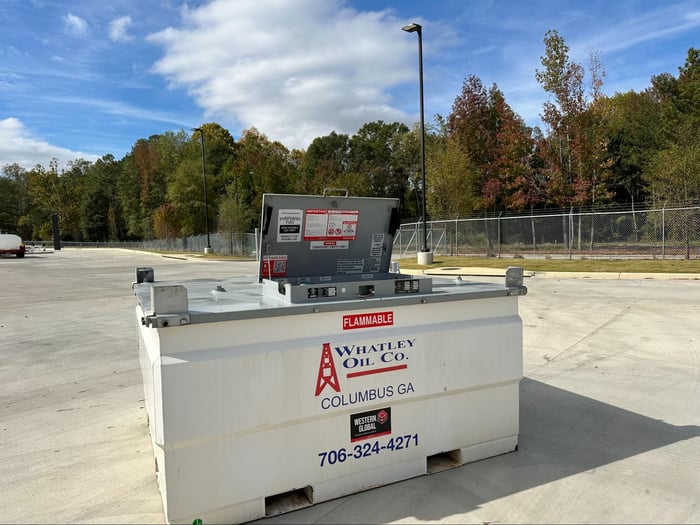
There are two main ways to set up a construction site fuel delivery. Either a diesel fuel truck comes to refuel a tank stored at the site (which is also usually rented from the fuel provider), or the delivery truck individually refuels each machine where it is parked. Both approaches reduce trips to retail fuel stations.
Your choice comes down to cost and convenience. Depending on the work you’re doing, either on-site tanks or wet hosing may be the easier and faster option. If you need to refuel throughout the day, all in one central location, on-site tanks are probably more convenient.
Vehicles that live in the same yard every night, but don’t need constant refueling all day long, though, are perfect for wet hosing — the refueling always happens after operating hours and causes no downtime. Wet hosing is also suitable for projects that are constantly migrating, with no central location, like gradual work along a lengthy roadway.
So, consider the way equipment moves through the project as your starting point.
Compare On-Site Tanks vs. Wet Hosing
On-Site Fuel Tank |
Wet Hosing |
|
|
Fueling point |
Equipment travels to the tank |
Delivery truck travels to equipment |
|
Fuel storage |
Diesel remains stored at the project |
Little or no bulk storage required |
|
Crew involvement |
Crew fuels equipment from the tank |
Delivery driver fuels equipment |
|
Best fit |
Equipment stays near a central fueling point |
Equipment is spread throughout the project |
|
Security consideration |
Stored fuel requires controlled access |
Less fuel remains stored on site |
|
Delivery approach |
Supplier replenishes the tank |
Supplier services individual machines |
Neither approach is one-size-fits-all. Take project layout and efficient movement of your equipment into account to make the best decision for your operation and budget.
Commercial Sites and Subdivisions Favor Central Fuel Access
Commercial site development tends to keep heavy duty diesel equipment within a defined work area. Residential subdivisions similarly use loaders or excavators within the area of the development.
An on-site tank is a central fueling point for contractors, and it doesn’t require a delivery truck to travel to and service each machine individually. These tanks can live at the location of the project, in contractor yards, or in fleet parking areas. Tank capacity should reflect fuel consumption and the preferred delivery schedule. Because diesel remains stored between deliveries, it’s important to give some attention to site security, too.
For longer projects with steady consumption, a tank gives the contractor control over when equipment gets fueled during the shift.
Highway and Utility Work Need Fuel Closer to Equipment
Highway construction has a few fuel delivery challenges to navigate. Because equipment spreads along the roadway as work progresses, there’s no one good spot to locate an on-site tank. It would add even more equipment movement to send every machine back to a central tank throughout the day — not efficient at all. If you’re always moving equipment back to the tank, or frequently moving the tank to keep up with the equipment, that’s one way for fuel costs to get out of control.
Think about using wet hosing for construction equipment on the move. The delivery truck can come right to those machines, instead, and fuel them up wherever they’re at over the course of the project. Utility projects are another example of a mobile project where it’s best to bring the fuel to the excavators or other equipment where the work is happening.
This construction fleet fuel delivery method also reduces the amount of contractor fuel stored at the project. The delivery schedule needs to match equipment usage so the truck reaches machines at practical points in the workday.
Consider Labor When Comparing Both Methods
An on-site tank puts a bit more of the daily fueling process into the contractor's hands. Someone on the crew has to access the tank and fuel up the equipment. If you go with wet hosing, that time commitment stays with the fuel delivery provider.
If crew time is tight, that could make a big difference — though a white glove service like wet hosing does cost a little bit more. Compare the labor involved with operating an on-site tank against the service cost of having equipment fueled individually.
Budget decisions start with a quoted fuel price, but you also have to look at how each arrangement affects crew time to understand the full impact of the operational costs.
Your Construction Site Fuel Delivery Could Use Both
A project does not need to commit exclusively to one method.
You could, for example, choose to use an on-site tank for equipment concentrated near the primary work area, but also schedule wet hosing for machines stationed farther away. Such an arrangement could even change as the project progresses and equipment moves into another phase of work.
A hybrid approach is a great option for contractors when one fueling method won’t fit the entire project.
Match Fuel Delivery to the Project With Whatley Oil
Whatley Oil provides on-site tanks and wet hosing for contractors in Georgia and Alabama. Our team will review how your equipment is positioned and how the project is expected to progress. From there we will help establish a construction site fuel delivery plan suited to the work.
Talk with Whatley Oil about the fueling setup for your next project.
FAQs
Wet hosing is a fuel delivery service where the supplier's truck travels to individual machines and fuels them on site. It reduces the need to move equipment to a central fuel tank.
The fuel supplier delivers diesel to a storage tank located at the project. Operators then fuel equipment from that tank as needed.
Each method fits different project conditions. Wet hosing suits equipment spread over a large work area while an on-site tank provides central fuel access for equipment concentrated near one location.
Commercial site development and residential subdivisions frequently keep equipment within a defined work area. A centrally located tank gives crews access to contractor fuel throughout the workday.
Highway work and utility projects frequently place equipment at different points along the project. Wet hosing brings fuel to those machines where they are working.
Stored diesel needs controlled access. Contractors should account for tank placement and site security when evaluating an on-site storage setup.
No. A construction site fuel delivery plan can use an on-site tank for equipment near a central work area while wet hosing serves machines positioned elsewhere.
Yes. Whatley Oil provides on-site fuel tanks and wet hosing for construction customers in Georgia and Alabama. The appropriate setup depends on how equipment is positioned and how fuel is used during the project.