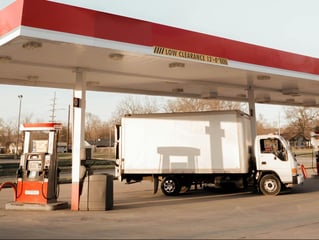

Small engine and commercial van fleets make a lot of fuel decisions that come down to habit. The equipment runs on gasoline, so easy does it, right? Drivers stop where they always have. Cards get swiped. Receipts pile up. Costs feel “about right” until someone takes a closer look.
In reality, how and where your fleet fuels will have a direct impact on operating costs. Dive a little deeper and you’ll see it can even impact productivity and scheduling. Two models dominate gasoline fleet fueling in Georgia and Alabama:
- Centralized fleet gas stations
- On-site refueling
Each of these models can work, but they solve different problems and deliver savings in different ways. Here’s how to evaluate both options and decide which fits your operation.
Option 1: Centralized Fleet Gas Stations
A centralized fleet gas station or network of fleet fuel stations gives your drivers a predictable place to refuel with a fleet gas card. You’ll often negotiate pricing ahead of time. Schedules are consistent and reporting will be cleaner than dealing with reimbursements for a pile of retail receipts.
This Model Works Well For… |
|
|
|
If you’re a Georgia-based service fleet with 10 vans refueling three times per week, frequent fueling detours can quietly erase any per-gallon savings. When drivers consistently go out of their way, costs shift from fuel to labor. However, an operation with a consistent and regular route can really benefit from the simplified billing and convenience of on-route fleet fueling stations.
Option 2: On-Site Refueling
On-site fleet fueling services bring gasoline directly to your yard, shop, jobsite, or facility. Vehicles are fueled where they park, often overnight or during off-hours. No detours and no receipts! You’ll never have to guess who fueled where.
This Model Works Well For… |
|
|
|
On-site refueling reduces downtime first and fuel cost second. Bulk pricing also plays a role. While gasoline pricing fluctuates, buying fuel in bulk for on-site delivery often stabilizes costs compared to retail or card-based pricing. Over time, that consistency makes budgeting easier.
For fleets in Georgia and Alabama, where labor availability and scheduling already require flexibility, it can be just as valuable to eliminate fueling detours as it is to save a few cents per gallon at in-network fleet fueling station pumps.
Fuel Programs, Side-by-Side Comparison
Many small fleets in Georgia and Alabama operate locally and return to the same yard each night. A profitable operation always runs on a tight schedule, too. For those kinds of fleets, on-site fueling often delivers more operational savings than centralized fueling stations.
Fleets with varied routes, multiple depots, or rotating schedules may benefit more from a fleet gas station model or a hybrid approach that combines both. A fleet gas card tied to approved locations limits off-route fueling and provides transaction-level visibility. On-site fleet fuel programs do the same by tying fuel usage to specific vehicles and delivery records.
Factor |
Fleet Gas Stations |
On-Site Refueling |
|
Fuel pricing |
Predictable, negotiated |
Stable bulk pricing |
|
Driver downtime |
Moderate due to detours |
Minimal to none |
|
Administrative work |
Lower than retail cards |
Very low |
|
Best for |
Route-based fleets |
Jobsite- or yard-based fleets |
|
Scalability |
Strong across regions |
Strong for local ops |
Both models rely on structure to work well. You’ll save the most money, regardless of where fuel is dispensed, when your team is able to combine fuel access with tracking and controls.
What matters most is alignment. Don’t worry about how it’s always been done. The fueling model should fit how your fleet actually runs. In both cases, the goal is fewer unknowns. Managers should be able to answer three questions quickly:
- How much fuel was used?
- Which vehicles used it?
- Did usage match the work performed?
When fuel data supports those answers, fuel efficiency goes up! Simple.
Okay, Really, Which Is Best?
Honestly, there’s no universal answer to which option always saves more. A fleet gas station model controls pricing and reporting. On-site refueling cuts downtime and simplifies mornings.
The real savings for your small engine and light-duty gasoline fleet will come from a fueling strategy that’s matched to how your drivers work. Choose fueling that supports your schedule rather than interrupting it, and cost/time savings will fall into place.