
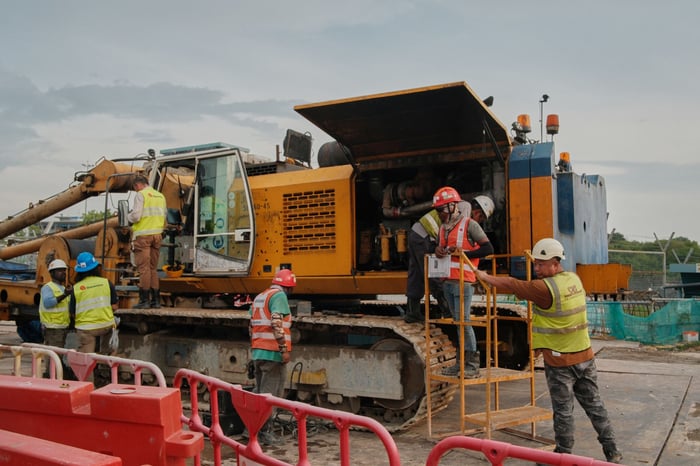
Too many fuel dollars disappear in idling equipment and at retail pumps with lost receipts. Avoid the mistakes below to keep construction fleet management fuel costs under control. Here are seven places to look if your fuel spend has been landing above budget.
1. Crews Buy Fuel at Retail Stations
Retail purchases are the bane of efficient project fuel costs. In a sense, they’re easy because they spread the responsibility for contractor fuel expense management out among drivers and crew members. However, each stop also takes an employee away from the project.
Consider on-site fuel storage instead. You can set up bulk deliveries to on-site storage tanks and put the diesel close to the equipment. The centralized supply leaves a crystal clear record of how much fuel the project received.
2. Equipment Burns Diesel at Idle
A lot of the wasted fuel on construction sites comes from idling engines. According to figures from the U.S. EPA, a large diesel engine can waste up to one gallon of fuel for every hour it idles.
So, need a place to look for measurable waste? Look no further than idle hours. Multiply unnecessary idle time by the number of idling machines — over the course of a full project — and you can see how construction equipment fuel consumption can get out of control.
3. Off-Road Equipment is Full of Taxed Diesel
Bulldozers and earthmovers used off public roadways qualify as “off-highway business uses” under federal fuel-tax rules. The IRS explains that dyed diesel intended for qualifying nontaxable uses is exempt from the federal diesel excise tax, apart from the applicable LUST (Leaking Underground Storage Tank) tax.
If you put on-road diesel into qualifying heavy equipment, you’ve basically paid a road-use tax for fuel that will never power the machine down a public highway. That’s burning money. Confirm eligibility before you choose dyed off-road diesel, but always opt for the tax-free stuff when you can.
4. Fuel Cards Pay for the Wrong Vehicles
You’ll need a suite of easy-to-use controls for all fuel cards assigned to the project. Improper purchases for personal vehicles or equipment outside the project sometimes inflate the fuel total. At the same time, the source of the overage is difficult to trace.
Set careful purchasing limits based on the vehicle or employee. Review all transactions against expected fuel use throughout the project. If you wait until closeout, you might discover questionable charges too late to prevent further misuse — if you figure them out at all amid the overwhelming pileup of fuel data.
5. Small Equipment Disappears From Fuel Records
Generators and compressors use fuel that might be overlooked. Huge excavators may get all the attention due to volume, but your books have to include every fuel-consuming asset. Pay attention to smaller diesel-powered machines to accurately reconcile your construction fleet management fuel costs against delivered gallons.
6. Poor Planning Leads to Emergency Deliveries
If the next scheduled delivery is going to show up too late for a low tank, contractors are faced with a choice: stop work or arrange for an emergency (unscheduled) fuel delivery — and any fees that come with it.
No doubt you’ve attempted to arrange delivery timing around accurate predictions of your consumption, but go a step farther. Use remote tank monitors. Your fuel supplier can use tank monitoring devices for real-time visibility into your fuel inventory. Now replenishment is based on physical tank levels as opposed to estimations.
7. Fuel Spend is Split Between Multiple Suppliers
What if one crew buys bulk diesel from a delivery supplier, and another crew uses retail fuel cards? Let’s throw in a third source that handles urgent, off-schedule deliveries. This isn’t uncommon, especially if your crew is working multiple jobsites in the area. All of those invoices eventually land in the same project budget and need to be reconciled.
You’ll have a clearer picture of total consumption if you consolidate fuel purchases to just one provider. It’s the easiest way to handle contractor fuel expense management and make sure your budget is efficient.
Find Fuel Savings for Independent Contractors
The posted diesel price is front and center. And it does have a big impact. But don’t neglect your planning and purchasing habits. They’re just as impactful for overall construction fleet management fuel costs.
Whatley Oil helps contractors in Georgia and Alabama manage jobsite fuel with bulk deliveries and on-site tanks. Our team can review how your crews currently purchase fuel and set up a delivery approach that gives you better control over project fuel spending.
Talk with Whatley Oil about your construction fuel needs.
FAQs
Construction fleet management fuel costs include the diesel purchased for vehicles and equipment along with expenses created by the way fuel is purchased or managed. Idling and unnecessary retail fuel trips are two examples.
Diesel engines continue consuming fuel while idling. EPA guidance states that a large diesel engine can consume up to one gallon per hour at idle. EPA NAP
Dyed diesel is exempt from the primary federal diesel excise tax when used for qualifying nontaxable purposes. IRS guidance identifies bulldozers and earthmovers among equipment used in off-highway business applications. IRS
Fuel cards create a record of purchases tied to drivers or vehicles. Setting appropriate purchasing controls and reviewing transactions helps identify fuel bought outside the intended project or equipment.
Yes. Generators and other diesel-powered equipment contribute to total project consumption. Tracking those assets provides a more complete record of where delivered fuel is used.
Remote monitoring tracks the amount of fuel remaining in an on-site tank. Suppliers can use that information when planning replenishment and reduce reliance on manual tank checks.
An on-site tank creates a central fuel supply for equipment working near the project. Bulk deliveries replenish that supply while giving the contractor records of the gallons delivered.
Track fuel-consuming equipment and review purchasing records throughout the project. Contractors should also match fuel type to eligible equipment and plan deliveries around consumption rather than waiting until inventory reaches a critical level.